

1. Average Cost of a Solar Carport in 2025
In 2025, the average solar carport cost varies widely depending on size, materials, and system capacity. For most residential setups, a standard single-car structure with a 3–5 kW solar array ranges between $9,000 and $16,000, while a two-car or multi-car setup can go from $18,000 to $35,000. Premium designs like a Custom Solar Aluminum Carport with integrated waterproofing and modern frame finishes can push total pricing toward the higher end. These systems not only serve as shade but also deliver a clean energy output of 3,500–7,000 kWh annually, helping homeowners offset a large portion of their utility bills.
1.1 Residential Solar Carport Pricing
A typical home solar carport is smaller in scale, designed to fit one or two vehicles while producing enough power for daily household use. On average, a single-car solar carport costs about $10,000 to $14,000, including solar panels, mounting, and wiring. If you upgrade to a double-car structure with a higher capacity inverter and thicker aluminum beams, costs can reach $25,000 or more. Homeowners often prefer sleek models like the modern solar carport for visual appeal and corrosion resistance, particularly in coastal regions.
| Residential Solar Carport Size | Capacity (kW) | Estimated Cost (2025) | Annual Energy Yield (kWh) |
|---|---|---|---|
| Single-Car | 3–4 kW | $9,000 – $14,000 | 4,200 – 5,500 |
| Double-Car | 6–8 kW | $18,000 – $28,000 | 8,000 – 11,000 |
| Multi-Car Solar Carport | 10 kW + | $30,000 – $40,000 + | 12,000 – 15,000 + |
The installation cost of a solar carport is influenced by local labor rates and foundation conditions. In areas with soft soil or high snow load requirements, contractors often add reinforced steel bases, increasing total cost by 8–12%. Despite that, the system pays for itself within 6–9 years, making it one of the smartest upgrades for residential energy independence.
1.2 Commercial and Large-Scale Solar Carport Pricing
For commercial projects, price scales dramatically due to the number of parking bays and total system capacity. A medium-sized commercial solar carport for 50–100 cars can cost between $400,000 and $750,000, typically supporting a 200–400 kW solar array. Large corporate or campus installations reaching 1 MW capacity may exceed $2 million, but they generate enough electricity to cover common-area lighting, EV charging stations, and partial grid feedback.
Industrial clients often choose a Multi-car Solar Carport for its modular scalability and reduced per-kilowatt cost. By designing repetitive structures, companies can lower fabrication costs by 15–20%, compared to one-off architectural projects.
1.3 Price Trends Compared to 2024
Compared to 2024, solar carport pricing in 2025 has stabilized due to improved panel efficiency and global material cost normalization. Aluminum frame prices have dropped about 6%, while inverter costs fell 9% as supply chains recovered. However, regional labor rates have gone up slightly—especially in the U.S. and Western Europe—resulting in an average 2–3% overall cost increase.
| Year | Average Residential Cost (per kW) | Commercial Cost (per kW) | Notable Factors |
|---|---|---|---|
| 2024 | $2,700 – $3,200 | $2,100 – $2,800 | Material shortage, high freight |
| 2025 | $2,600 – $3,100 | $2,000 – $2,700 | Stable supply, improved panel yield |
For buyers considering long-term investment, 2025 remains a favorable year to purchase a solar carport, especially with available federal tax credits and higher panel efficiency. Choosing a Solar Carport system with integrated rainwater channels and durable aluminum frames ensures both energy savings and low maintenance for over 20 years.
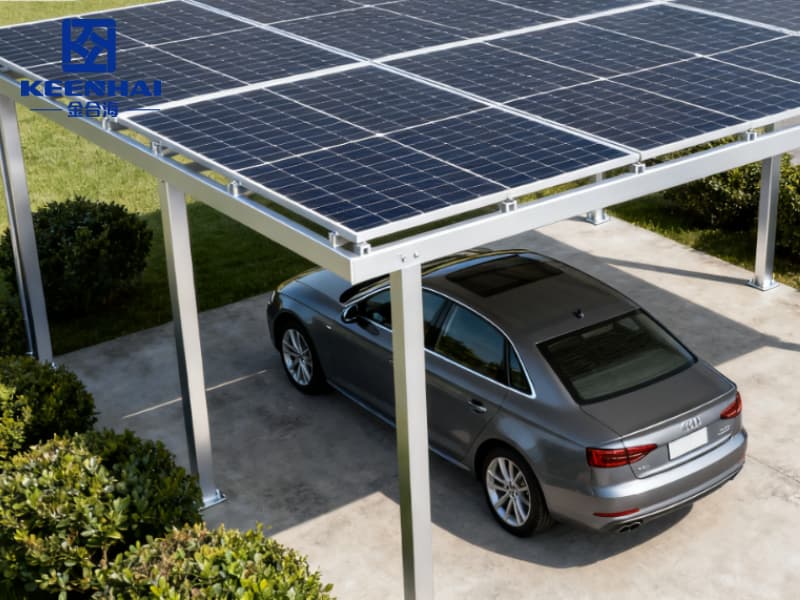
2. Key Factors That Affect Solar Carport Cost
When estimating the total price of a solar carport, several real-world variables have a direct impact — from the structure size and system wattage to local labor costs and panel type. These details determine whether your investment lands closer to $10,000 or $100,000. Let’s break down the most influential cost drivers below.
2.1 Size and Power Capacity (kW Output)
The bigger the carport, the more panels and steel or aluminum framing it needs — and that scales cost quickly. For example, a 3 kW single-car setup might only require 8–10 panels, while a 10 kW multi-car solar carport can need over 25 modules, plus stronger beams to handle weight and wind loads. Each additional kilowatt adds roughly $2,500–$3,000 to the total budget.
| Carport Capacity | Vehicle Spaces | Approx. Power Output | Estimated Total Cost (2025) |
|---|---|---|---|
| 3–4 kW | 1 car | 4,500–5,000 kWh/year | $9,000–$14,000 |
| 6–8 kW | 2 cars | 8,500–10,000 kWh/year | $18,000–$26,000 |
| 10 kW+ | 3+ cars | 12,000–15,000 kWh/year | $30,000–$40,000+ |
A homeowner in California, for instance, recently installed a double-bay custom aluminum solar carport producing 7 kW. It powers their entire household lighting and two EV chargers, cutting annual electricity costs by more than $1,200. High-yield designs like Multi-car Solar Carport models often achieve better per-watt value thanks to shared foundations and integrated cable runs.
2.2 Material and Structural Design
The choice of materials affects both the upfront expense and the long-term durability. Most residential solar carports use powder-coated aluminum or galvanized steel. Aluminum offers lightweight strength, corrosion resistance, and clean aesthetics, while steel provides raw rigidity but needs routine anti-rust coating. For high-end projects, Custom Solar Aluminum Carports integrate anodized finishes, concealed wiring channels, and thicker columns (up to 4 mm), raising cost but also lifespan — easily surpassing 25 years.
Material cost per square foot averages:
-
Aluminum frame: $45–$70/ft²
-
Steel frame: $35–$55/ft²
-
Hybrid aluminum-steel frame: $55–$80/ft²
Homeowners in coastal or humid climates lean toward premium aluminum builds for minimal maintenance. Meanwhile, commercial buyers prioritize modular steel designs that allow future expansion.
2.3 Solar Panel Type and Efficiency
Panel efficiency directly determines how much energy your carport generates per square meter. In 2025, monocrystalline panels remain the gold standard, offering 21–23% efficiency, while polycrystalline options deliver around 17–19% at a lower price. Thin-film panels, though cheaper, are typically used only in large commercial canopies where space isn’t an issue.
| Panel Type | Efficiency | Cost per Watt (2025) | Best Use Case |
|---|---|---|---|
| Monocrystalline | 21–23% | $0.80–$1.10 | Residential & premium |
| Polycrystalline | 17–19% | $0.60–$0.85 | Budget builds |
| Thin-Film | 12–15% | $0.40–$0.70 | Large-scale installations |
Choosing high-efficiency panels means fewer units for the same power output — ideal for compact carports. For instance, a Modern Solar Carport using 430 W monocrystalline modules may need only 14 panels to produce 6 kW, whereas lower-grade polycrystalline systems require up to 20 panels for equal yield. This balance between efficiency and surface area is a major factor when designing cost-optimized solar shading systems.
2.4 Labor, Installation Location, and Permitting Fees
Installation and permitting can account for 10–20% of total cost. Labor rates in the U.S. average $0.50–$0.90 per watt, but coastal cities like San Diego or Miami often exceed $1.10 due to stricter codes and higher wages. Permitting fees typically add another $300–$1,200, depending on local inspection requirements.
Key location-based variables include:
-
Soil and foundation type – rocky or sloped ground needs extra concrete work.
-
Snow load rating – colder regions require reinforced trusses and thicker supports.
-
Electrical connection distance – longer trenching from inverter to the grid adds labor time and wiring costs.
A well-designed Solar Carport installed in an accessible suburban lot can save 15% on total labor compared to projects in dense urban areas. To further cut costs, buyers often bundle EV charging and solar in one installation phase — minimizing redundant electrical work.
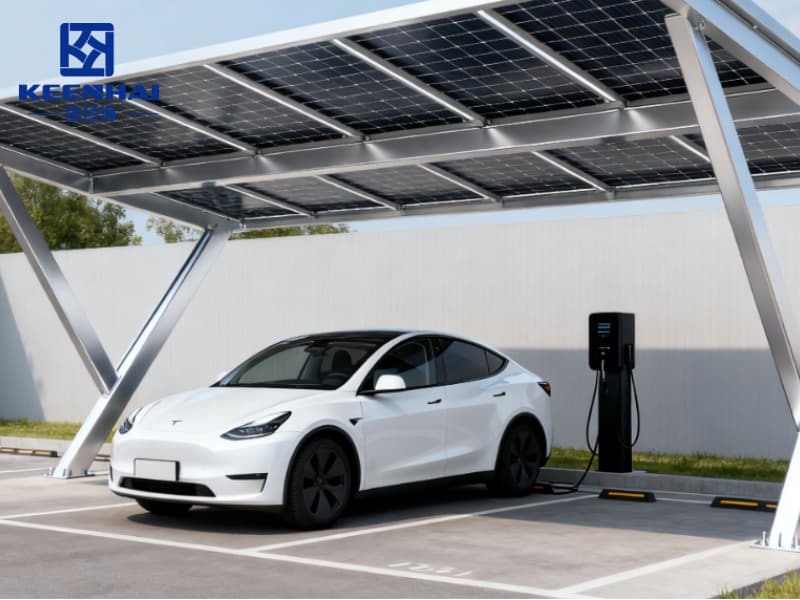
3. Cost Breakdown by Carport Type
3.1 Single-Car vs Multi-Car Solar Carport
Single-car solar carports (approx 200–300 sq ft, ~3–5 kW PV array) usually cost between $12,000 and $18,000 in 2025, including panels, structure, wiring, and permits. Meanwhile, a multi-car solar carport covering 2–3 vehicle bays with ~10–15 kW capacity can cost $30,000 to $55,000 depending on layout and panel quality. The per-watt cost typically drops as capacity increases (economies of scale), often by 15–25% for larger units. For example, a 12 kW multi-car setup might see a cost near $3.00/watt, while a smaller single-car version might approach $3.50–$4.00/watt.
3.2 Aluminum vs Steel Solar Carport
Aluminum frames cost more initially but reduce long-term maintenance. For similar size, structure strength, and panel capacity:
-
Aluminum solar carports: $8,000 to $14,000 for a single-car aluminum-framed structure.
-
Steel counterparts: $6,000 to $12,000 for the same footprint.
Aluminum resists corrosion and is lighter, which lowers shipping and foundation costs in some zones. Steel is stronger under heavy snow or wind loads but demands more frequent anti-rust treatment. A Custom Solar Aluminum Carport with reinforced aluminum beams and premium finish may push toward the top of that aluminum range if designed for harsh weather.
3.3 Custom Solar Carport vs Prefabricated Models
Prefab solar carport kits are cheaper out of the gate—standard sizes, limited customization. They often run $2,000 to $8,000 for simple metal frame kits (single-car), before solar panels. Custom solar carports, where structure, roof design, panel layout, aesthetic details are tailor-made, often cost 2× to 3× more. For example, building a custom two-car solar carport with special architectural roof pitch, integrated lighting, hidden wiring, can cost $25,000 to $45,000+. Prefab models offer decent value if your size and style needs align with standard kit dimensions; custom builds win when you want specific design, durability, or higher panel efficiency integrated nicely.
4. Installation and Maintenance Expenses
4.1 Typical Installation Process and Timeline
Installing a solar carport typically takes 2–4 weeks, depending on project size and site conditions. The process includes site assessment, foundation setup, frame assembly, electrical wiring, and solar module installation. Labor costs range between $0.40–$0.80 per watt, with total installation averaging $5,000–$15,000 for residential setups and much higher for commercial-scale carports.
4.2 Annual Cleaning, Inspection, and Repair Costs
Solar carports require low yearly maintenance, averaging $150–$300 for cleaning and panel inspection. Dust, bird droppings, and debris can reduce efficiency by up to 10–15% if left untreated. Annual inspections check for loose connections, corrosion, and inverter performance, helping maintain consistent energy output and protect warranties.
4.3 Warranty and Long-Term ROI Considerations
Most solar panels come with 25-year performance warranties, ensuring at least 80% output retention. Inverters are usually covered for 10–15 years, while metal structures can last over 30 years with minimal corrosion. Factoring in electricity savings of $800–$2,000 per year, most solar carports achieve a full ROI within 6–9 years, depending on energy rates and system efficiency.
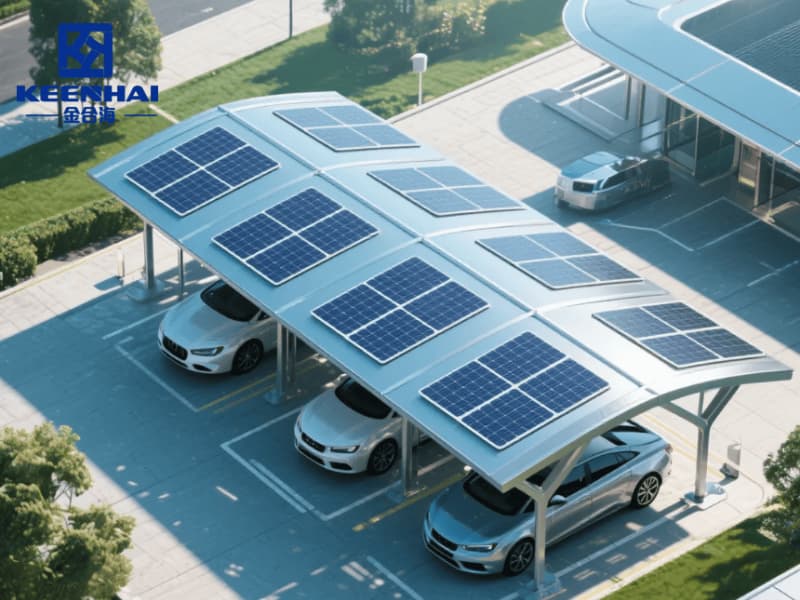
5. Savings & Payback Period Analysis
5.1 Annual Energy Savings Based on Size
A 5 kW residential solar carport typically produces 6,000–7,000 kWh per year, translating to around $900–$1,200 in annual energy savings based on an average U.S. electricity rate of $0.15–$0.17/kWh. Larger 20 kW commercial units can save $3,500–$5,000 per year, depending on sun exposure and panel efficiency.
5.2 Payback Timeline and Incentives
The average solar carport payback period ranges between 6–10 years, heavily influenced by installation cost, regional sunlight, and government incentives. Federal tax credits (30% under the Investment Tax Credit) and local rebates can reduce upfront costs by $4,000–$10,000, shortening the ROI period significantly.
5.3 Long-Term Financial Benefit
After payback, a solar carport continues generating free energy for 15–20 years with minimal maintenance. Over its lifespan, total savings can exceed $20,000–$40,000 per household or $100,000+ for commercial lots, while also increasing property value by 3–5% due to its dual functionality as parking and renewable power infrastructure.